
The important bit is that we decide together what makes sense for you.
Hypnotherapy can also become part of our work where it feels appropriate, and you actively want to use it. For clients who are interested, I may also use cards as a reflective psychological tool, using the images, themes and associations that come up to explore thoughts or perspectives. There’s no fortune telling involved.
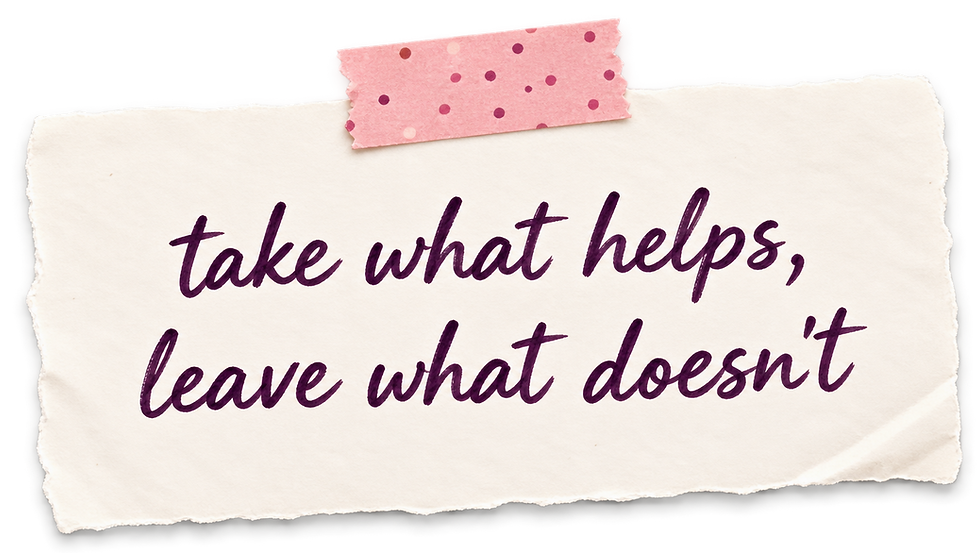
At other times, something more practical might be useful. We might look at boundaries, experiment with a different response, use a CBT-informed tool, work towards a goal, or find something small to try between sessions. Anything I suggest outside the session is optional. Think of it as take what helps, leave what doesn’t, rather than homework I’ll be checking up on next week.
We might explore where a pattern began, look at relationships or experiences that shaped you, notice how you talk to yourself, make sense of emotions, or uncover beliefs that have quietly been influencing the way you live.
How I Work


You don’t need to work out whether you need psychotherapy, coaching, hypnotherapy or something else before we start. I don’t switch between different professional “hats” depending on what comes up. For me, it’s one fluid piece of work.
My psychotherapy training is pluralistic, with core training across psychodynamic, humanistic and CBT approaches, while my additional training in transformational coaching and hypnotherapy gives us more ways of working when they’re useful. I also draw on creative and experiential tools, so we’re not limited to sitting and talking if another way of exploring something might help.

Built Around the Person, Not the Method
What it actually feels like to work with me

If I reflect something back and it doesn’t fit, tell me. If I suggest an exercise and you think, absolutely not, that’s fine too. I’m not attached to being right, and you don’t have to agree with me because I’m the therapist. Learning to trust your own response is part of the work.
How active I am will depend on what you need. Sometimes you might have a lot you need to get out, and I’ll mostly listen, reflect and give you room. Other times you might arrive thinking, I have no idea what I’m supposed to talk about, and I’ll help us get started.
There is no correct way to show up. You can cry. You can swear. You can laugh. You can change your mind halfway through a sentence. You can take your time. You do not need to perform being a “good therapy client” for me.

I work in a very client-centred way, which means I genuinely believe you know yourself better than I ever will. I might notice something, ask a question, offer another perspective or gently challenge you, but I’m not sitting there with a secret answer about who you are or what you should do with your life.


Explore
Patterns
Relationships & Experiances
Boundaries & Responces
CBT–informed
Tools
Goals & Practical Changes
Experiential
Tools
Writing &
Imagery
Hypnotherapy & Meditation
Creative
Tools
What might we actually do?
That depends on what we’re working with.
You’ll have opportunities to tell me from the beginning what kinds of approaches you’re curious about and what you definitely don’t want. Nothing needs to be sprung on you.
I also draw on humanistic and experiential approaches, including ideas from person-centred and Gestalt therapy, and may use things such as chair work, writing, imagery or other creative exercises. These can be particularly useful when you keep finding yourself saying “I don’t know”, struggle to put something into words, or feel as though talking around something isn’t quite getting us anywhere.
Ultimately, I bring the training and the toolkit. You bring you. We work out the rest together.

I work in a very client-centred way, which means I genuinely believe you know yourself better than I ever will. I might notice something, ask a question, offer another perspective or gently challenge you, but I’m not sitting there with a secret answer about who you are or what you should do with your life.
We’ll usually have some sense of what you want from our work together, but that doesn’t need to be a perfectly defined goal. Sometimes “I want to understand why I feel like this” is enough to begin. We can come back to what you want as the work develops, see what has changed, and change direction when you need to.

The important bit is that we decide together what makes sense for you.
If I reflect something back and it doesn’t fit, tell me. If I suggest an exercise and you think, absolutely not, that’s fine too. I’m not attached to being right, and you don’t have to agree with me because I’m the therapist. Learning to trust your own response is part of the work.
How active I am will depend on what you need. Sometimes you might have a lot you need to get out, and I’ll mostly listen, reflect and give you room. Other times you might arrive thinking, I have no idea what I’m supposed to talk about, and I’ll help us get started.
There is no correct way to show up. You can cry. You can swear. You can laugh. You can change your mind halfway through a sentence. You can take your time. You do not need to perform being a “good therapy client” for me.
I work in a very client-centred way, which means I genuinely believe you know yourself better than I ever will. I might notice something, ask a question, offer another perspective or gently challenge you, but I’m not sitting there with a secret answer about who you are or what you should do with your life.
I also draw on humanistic and experiential approaches, including ideas from person-centred and Gestalt therapy, and may use things such as chair work, writing, imagery or other creative exercises. These can be particularly useful when you keep finding yourself saying “I don’t know”, struggle to put something into words, or feel as though talking around something isn’t quite getting us anywhere.
At other times, something more practical might be useful. We might look at boundaries, experiment with a different response, use a CBT-informed tool, work towards a goal, or find something small to try between sessions. Anything I suggest outside the session is optional. Think of it as take what helps, leave what doesn’t, rather than homework I’ll be checking up on next week.
Hypnotherapy can also become part of our work where it feels appropriate, and you actively want to use it. For clients who are interested, I may also use cards as a reflective psychological tool, using the images, themes and associations that come up to explore thoughts or perspectives. There’s no fortune telling involved.
Ultimately, I bring the training and the toolkit. You bring you. We work out the rest together.
We might explore where a pattern began, look at relationships or experiences that shaped you, notice how you talk to yourself, make sense of emotions, or uncover beliefs that have quietly been influencing the way you live.
How I Work
You don’t need to work out whether you need psychotherapy, coaching, hypnotherapy or something else before we start. I don’t switch between different professional “hats” depending on what comes up. For me, it’s one fluid piece of work.
My psychotherapy training is pluralistic, with core training across psychodynamic, humanistic and CBT approaches, while my additional training in transformational coaching and hypnotherapy gives us more ways of working when they’re useful. I also draw on creative and experiential tools, so we’re not limited to sitting and talking if another way of exploring something might help.
Built Around the Person, Not the Method
What it actually feels like to work with me
What might we actually do?
That depends on what we’re working with.
You’ll have opportunities to tell me from the beginning what kinds of approaches you’re curious about and what you definitely don’t want. Nothing needs to be sprung on you.
I work in a very client-centred way, which means I genuinely believe you know yourself better than I ever will. I might notice something, ask a question, offer another perspective or gently challenge you, but I’m not sitting there with a secret answer about who you are or what you should do with your life.
We’ll usually have some sense of what you want from our work together, but that doesn’t need to be a perfectly defined goal. Sometimes “I want to understand why I feel like this” is enough to begin. We can come back to what you want as the work develops, see what has changed, and change direction when you need to.
The important bit is that we decide together what makes sense for you.
If I reflect something back and it doesn’t fit, tell me. If I suggest an exercise and you think, absolutely not, that’s fine too. I’m not attached to being right, and you don’t have to agree with me because I’m the therapist. Learning to trust your own response is part of the work.
How active I am will depend on what you need. Sometimes you might have a lot you need to get out, and I’ll mostly listen, reflect and give you room. Other times you might arrive thinking, I have no idea what I’m supposed to talk about, and I’ll help us get started.
There is no correct way to show up. You can cry. You can swear. You can laugh. You can change your mind halfway through a sentence. You can take your time. You do not need to perform being a “good therapy client” for me.
I work in a very client-centred way, which means I genuinely believe you know yourself better than I ever will. I might notice something, ask a question, offer another perspective or gently challenge you, but I’m not sitting there with a secret answer about who you are or what you should do with your life.
I also draw on humanistic and experiential approaches, including ideas from person-centred and Gestalt therapy, and may use things such as chair work, writing, imagery or other creative exercises. These can be particularly useful when you keep finding yourself saying “I don’t know”, struggle to put something into words, or feel as though talking around something isn’t quite getting us anywhere.
At other times, something more practical might be useful. We might look at boundaries, experiment with a different response, use a CBT-informed tool, work towards a goal, or find something small to try between sessions. Anything I suggest outside the session is optional. Think of it as take what helps, leave what doesn’t, rather than homework I’ll be checking up on next week.
Hypnotherapy can also become part of our work where it feels appropriate, and you actively want to use it. For clients who are interested, I may also use cards as a reflective psychological tool, using the images, themes and associations that come up to explore thoughts or perspectives. There’s no fortune telling involved.